
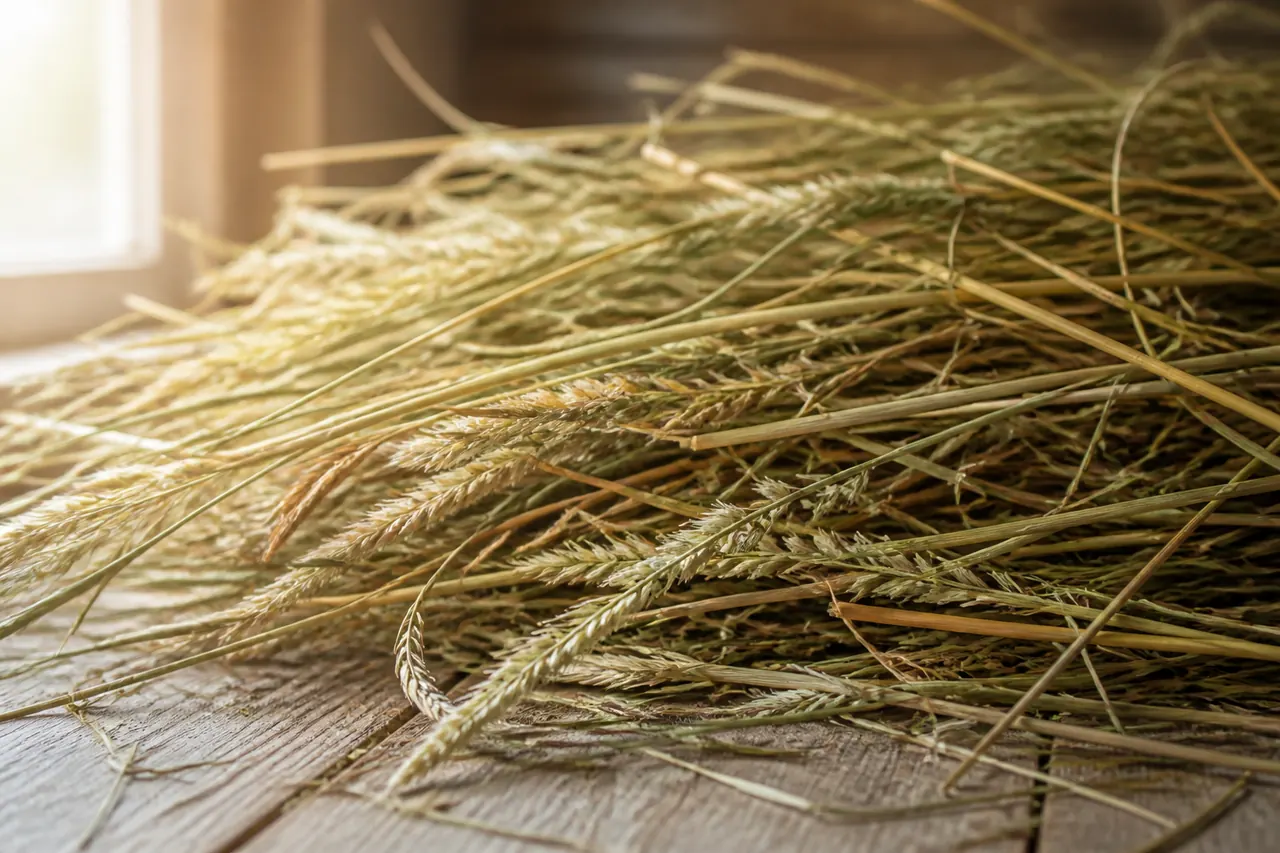
Types of Hay for Guinea Pigs: Timothy, Meadow, Orchard & More
Quick answer
Key facts
Adult guinea pigs need continuous access to good-quality grass hay such as Timothy, meadow or orchard. Alfalfa is a higher-calcium legume usually reserved for young, pregnant or nursing animals, not healthy adults.
- Hay supports digestion, dental wear and natural grazing behaviour.
- Timothy, meadow and orchard grass differ in softness and stalk structure.
- Choose clean, dry, long-strand hay with a fresh grassy smell.
- Never let the hay supply run out — refill before piles are empty.
Choosing the right hay is less about finding the most expensive pack and more about knowing what makes a good everyday choice. Texture, freshness, plant variety and life stage can all affect what a guinea pig prefers and how much it actually eats.
For most adult pets, grass hay is the everyday option. When choosing hay, look for a clean, dry product with plenty of long strands and a fresh smell. Timothy, meadow and orchard varieties differ in softness and structure, so the right choice can vary between animals. For how hay sits beside pellets and vegetables, see what guinea pigs should eat every day and the main feeding guide.
Grass hay first
Timothy, meadow and orchard are everyday options for most healthy adults — texture differs by cut.
Chew and digest
Long strands support continuous grazing, dental wear and the fibre gut health depends on.
Freshness matters
Clean, dry, long-strand hay with a grassy smell is more useful than the most expensive pack label.
The Importance of Hay for Guinea Pigs
Many guinea pig owners know that hay is essential to their pet's diet, but choosing the right variety is not always straightforward. Understanding the different types of hay for guinea pigs can help you choose one that supports their everyday feeding needs. Here, we look at the main options and what makes each one different.
A guinea pig is naturally adapted to graze for long periods. Each guinea pig may favour a different balance of coarse stems and softer leaves, but regular intake matters more than appearance alone.
This grazing pattern has an important physical purpose. A guinea pig's continuously growing teeth require regular chewing, and the long strands encourage sustained jaw movement that supports natural tooth wear and dental health.
A guinea pig's digestive system is designed to process fibrous plant material continuously. As hindgut fermenters, guinea pigs rely on regular hay intake to support normal functioning of gut health microbial activity during digestion. Hay experts therefore emphasise keeping a consistent supply available as part of everyday care.
Hay should be available throughout the day and night. Rather than treating it as something added only at mealtimes, provide several accessible piles so each pet can graze whenever it chooses.
Timothy Hay and Other Grass Options
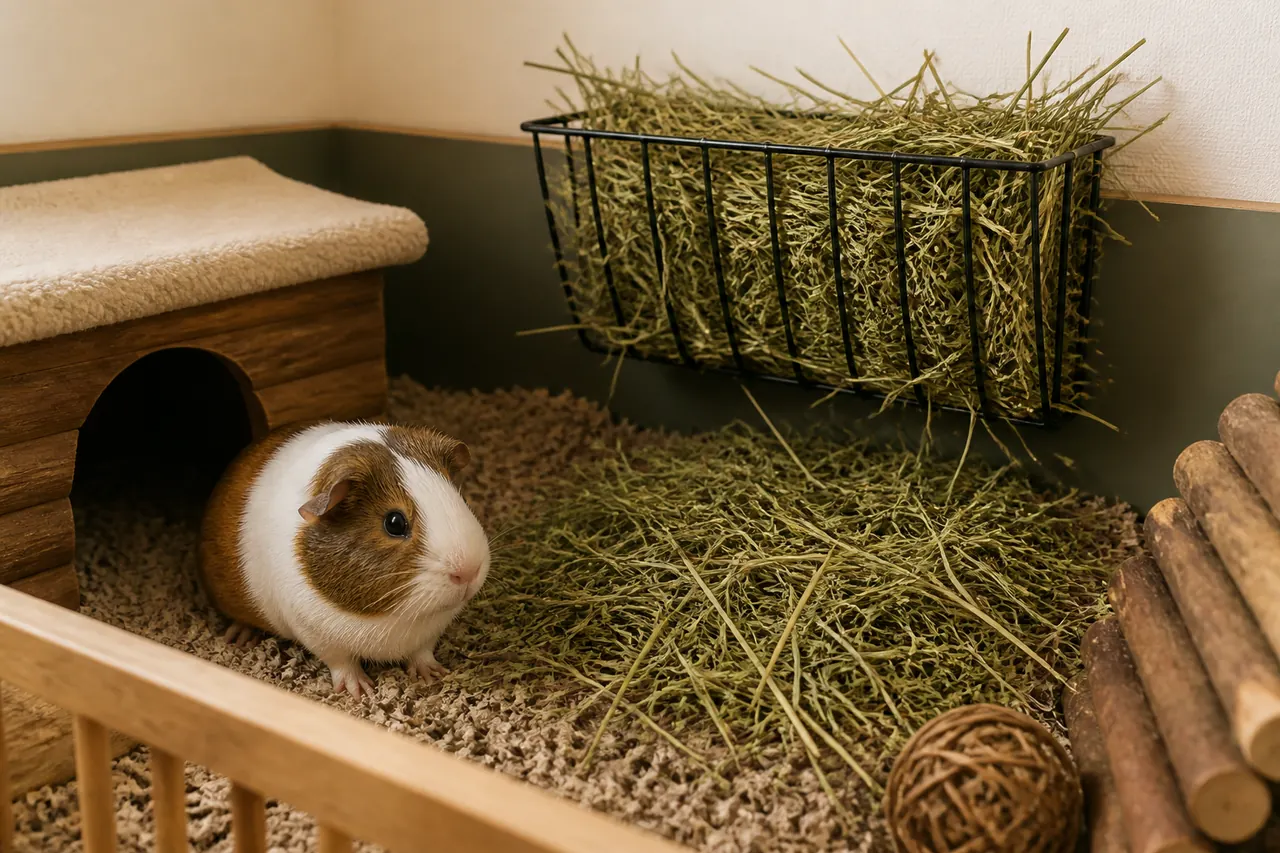
Timothy hay is a popular choice for adult guinea pigs because its mixture of stems, leaves and seed heads provides different textures. One batch may be relatively coarse and stalky, while another may contain softer leaves depending on the harvest.
Meadow hay offers another texture. As it can contain a mixture of grasses, its appearance and composition may vary between batches.
Orchard grass tends to have a softer texture and can be useful for animals that are less interested in coarse stalks. Some owners also rotate suitable varieties rather than relying on a single type throughout the year.
Forage hay can provide a mix of grasses, leaves and natural textures that makes grazing more varied and engaging. Choosing a clean, good-quality blend also gives your guinea pig more opportunity to forage through different strands.
There is no need to assume that one variety will suit every animal. The best hay is fresh, appropriate for the animal and eaten readily. Trying a smaller pack first can help reduce hay waste before buying a larger quantity.
| Type | Typical use |
|---|---|
| Timothy | Everyday grass hay for most healthy adults |
| Meadow | Mixed grasses; texture varies by batch |
| Orchard | Softer option when coarse stalks are refused |
| Forage blends | Varied textures for more engaging grazing |
| Alfalfa | Higher calcium/protein; life-stage specific, not routine for adults |
How to Choose Right Hay for your Pet
A quick check of the pack can tell you a lot about its quality. Look beyond packaging claims and inspect the actual product.
- Smell and drynessIt should smell pleasantly grassy, not stale or musty, and feel dry with no damp or mouldy sections.
- Structure and cleanlinessLook for long strands with stalks and leaves, and avoid packs with excess dust, mould or contamination.
- Store cool and dryKeep purchased hay ventilated and away from moisture — a large bag only saves money if storage is sound.
- Smell: It should have a pleasant, grassy smell rather than a stale or musty odour.
- Dryness: The strands should feel dry, with no damp or mouldy sections.
- Structure: Look for long pieces with a mixture of stalks and leaves.
- Cleanliness: Avoid packs containing excessive dust, visible mould or contamination.
Texture is also worth considering. Mature grass can contain more coarse material and encourage prolonged chewing, while softer cuts may appeal to animals that leave thicker stalks behind.
Pay attention to what remains after feeding. If most of one batch is repeatedly discarded, trying another cut may be more useful than continuing to refill the same product.
Good hay storage also protects quality after purchase. Keep it somewhere cool, dry and ventilated, away from rain and condensation. Buying a large pack only saves money if you have somewhere suitable to store it.
How Much Hay Should Be Included in a Guinea Pig Diet?
Healthy adults need constant access rather than a tightly measured serving. Refill the supply before it runs out and check feeding areas more than once during the day.
Do not judge availability only by the size of the pile. A pile may still look full after the preferred leaves and softer strands have been eaten. Check what each guinea pig is actually consuming.
Presentation can encourage natural grazing behaviour. Some can be placed in a rack or feeder, while loose piles around the enclosure allow animals to explore and search through it. Multiple feeding points can be particularly useful when several pets share the same space.
Some of the supply will inevitably become bedding or be scattered around the enclosure. Remove wet or heavily soiled portions and replace them with clean material. This helps separate normal hay waste from a genuine reduction in appetite.
Alfalfa Hay: When Is It Appropriate?
Alfalfa deserves separate consideration because it is a legume rather than the same type of grass normally used for everyday adult feeding.
It contains more calcium and protein. Veterinary guidance commonly reserves it for particular life stages, including young, pregnant or nursing animals, rather than using it as the routine option for healthy adults.
This is why checking the actual plant type matters. Two bags may both look like dried forage while having different nutritional characteristics.
If your guinea pig has urinary, dental or digestive concerns, discuss the most appropriate choice with a vet. Individual health requirements may affect the overall pig diet, and hay supplements should not be used as a reason to reduce access to suitable long-strand material unless professional care instructions indicate otherwise. See the health guide for when appetite or chewing changes need urgent attention.
Keeping the Supply Fresh and Appealing
Quality can deteriorate after purchase if storage and serving are overlooked. Buy an amount you can keep dry and use while it still smells fresh.
Before adding a new handful, check it for dampness, contamination or foreign material. Refresh feeding areas rather than continually placing fresh strands over old, soiled material.
Preference also matters. Some guinea pigs readily accept a new harvest, while others notice changes in smell and texture. A gradual transition between batches can help when an animal is particularly selective.
A sudden refusal is different from ordinary preference. If a pig stops eating, produces fewer droppings, drools, loses weight or appears uncomfortable when eating, seek veterinary care promptly. Dental conditions such as malocclusion and digestive problems can affect appetite.
Fresh vegetables, pellets, vitamin C sources and fresh water have their own roles, but none replaces the long-strand material required for regular grazing. Guinea pigs need a high-fibre diet, and veterinary welfare guidance recommends continuous access to good-quality food. For produce ideas that complement hay, see best vegetables for guinea pigs.
Frequently asked questions
- Is it safe to leave hay in the enclosure all day?
- Yes. Hay should remain available as an essential food source throughout the day. Remove any wet or heavily soiled portions and replace them with fresh hay so your pet always has clean hay available.
- Can guinea pigs go 24 hours without hay?
- No. Guinea pigs need constant access to hay because their digestive system relies on regular fibre intake. If your pet stops eating hay even when a fresh supply is available, contact a vet promptly.
- Can it be used as bedding too?
- It can become part of the bedding as animals move it around, but material in sleeping and toilet areas becomes contaminated more quickly. Always maintain a separate, clean supply intended for eating.
- What if my pet only eats soft pieces?
- A preference for particular textures is not unusual. Try another cut or suitable variety rather than restricting access. A significant reduction in overall intake, particularly alongside weight loss or difficulty eating, needs veterinary attention.
- Are rabbit products suitable?
- Some plain grass products marketed for a rabbit may also be suitable, but always check the ingredients and quality rather than relying on the animal shown on the packaging. Not every rabbit product is automatically appropriate for guinea pigs.