
Guinea Pig Treats and Snacks: Healthy Choices, Portions & What to Avoid
Quick answer
Key facts
Healthy guinea pig treats are simple, plant-based and tiny — herbs, forage and small produce pieces work better than sugary commercial snacks. Offer roughly once a week or two and keep hay as the main food.
- Read ingredient lists; avoid sugar, honey, cereals and sweet coatings.
- Fresh veg or herbs from the daily allowance can double as hand rewards.
- Hide dried botanicals in hay to make a small amount more interesting.
- Never use treats to replace normal food if appetite drops — contact a vet.
A treat should add interest to your guinea pig's routine, not become another meal. The best choices are usually simple, plant based and easy to portion, whether that means a small piece of suitable fresh produce or a little dried botanical forage.
The bigger challenge is knowing what actually deserves to be called a healthy option. Some products made for small animals contain sugar or ingredients that offer little benefit. This guide explains how to compare choices, understand portions and use rewards in more interesting ways. For everyday feeding context, see the feeding guide and what guinea pigs should eat every day.
Plant-based first
Herbs, forage and tiny produce pieces fit a herbivore diet better than sugary commercial snacks.
Read the label
Skip sugar, honey, cereals and sweet coatings — recognisable plant ingredients matter more than packaging.
Small and occasional
About once a week or two is a common guide; keep hay as the main food every day.
What Makes a Good Treat for a Guinea Pig?
Start with the ingredient itself rather than the word "treat" on the packaging. A guinea pig is a herbivore, so extras should fit naturally with a plant based diet.
Fresh vegetables, herbs and suitable botanicals can make simple rewards. Fruit should be offered only occasionally in small portions due to its natural sugar. Always choose safe ingredients and keep portions controlled — see best vegetables for guinea pigs and best fruits for guinea pigs.
Natural Options or Commercial Snacks: What Should You Choose?
There is no requirement to buy a specially manufactured product just because you want to reward your pet.
Suitable fresh produce, herbs and carefully selected botanical ingredients can provide plenty of variety. Blue Cross notes that commercial products are often high in sugar and are not necessary in the diet.
Packaged snacks can still be assessed individually, but the ingredient list matters more than the picture on the front. Products marketed with colourful shapes, sweet coatings or cereal ingredients should not automatically be assumed to be suitable.
Fresh Options
A tiny piece of an appropriate vegetable can work well when hand feeding. Using something already known to agree with your pet also avoids introducing a completely new ingredient every time you want to offer a reward.
Fresh herbs provide another option. Their stronger aroma can make a very small serving interesting without requiring a large quantity.
Dried Botanicals
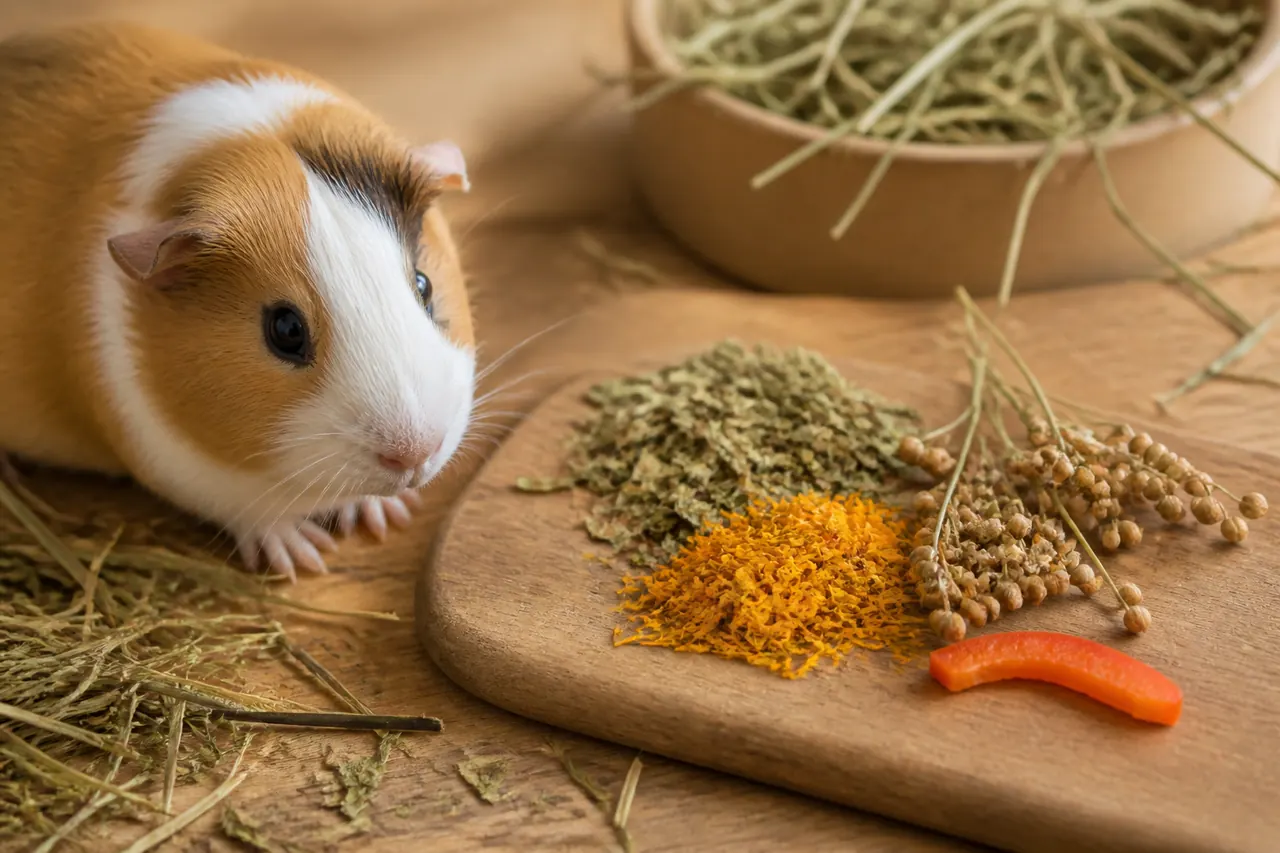
Dried dandelion, marigold, mint and other species appropriate herbs and flowers can introduce different textures. Blue Cross specifically uses herbs and flowers such as dandelions, marigolds, basil, coriander, cress, mint and dill in its guinea pig forage-box guidance.
If you collect plants yourself, correct identification is essential. Avoid material exposed to pesticides, weed killers, heavy traffic or contamination from other animals.
How to Read the Label on Pig Treats
Turn the packet around and check the ingredients before buying. Choose products based on recognisable plant ingredients rather than cereals, sweeteners or coloured pieces, and avoid added sugar and honey.
Vegetable biscuits should also be judged by their full recipe, not the vegetable shown on the pack. Check serving sizes and storage instructions, and keep dried products dry and fresh. The same label discipline applies when choosing guinea pig pellets.
Using Hay and Forage to Make Rewards More Interesting
Handing over food is not the only way to offer something enjoyable.
Guinea pigs naturally spend considerable time searching and grazing. Instead of putting an extra straight into a bowl, you can turn a small portion into an activity.
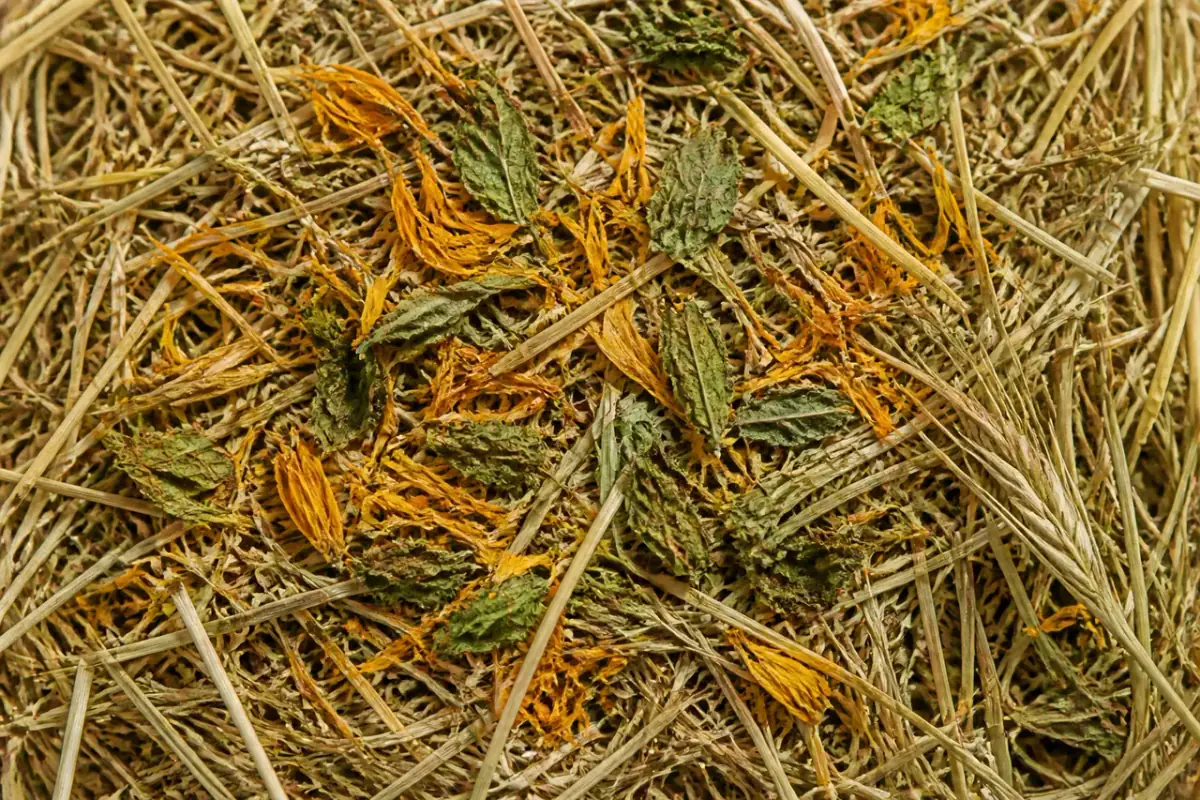
For example, hide a little dried forage among a fresh pile of hay, scatter a few suitable herbs around the enclosure or place them inside a simple forage box. Blue Cross recommends this type of setup to encourage natural searching behaviour. Good hay quality still matters — see types of hay for guinea pigs.
- Start with a tiny amountUse a pinch of dried forage or herb rather than a pile that would change the day’s calorie balance.
- Hide it in hayScatter pieces through a fresh hay pile or simple forage box so searching becomes part of the reward.
- Keep interaction calmOffer a small hand reward during quiet time — novelty comes from presentation, not larger portions.
This changes the experience without increasing the quantity. The animal has to sniff, explore and search to locate the reward.
You can also place tiny pieces in several locations instead of presenting the entire portion together. For your small animals, this can encourage movement and make a very small amount last longer as an activity.
Food should not be the only form of enrichment, however. Tunnels, hiding places, safe chewable materials and opportunities to explore can provide stimulation without adding calories.
How Often Should Treats Be Given?
This is where moderation becomes important.
PDSA's current veterinary guidance suggests offering a treat around once every week or two. It also recommends reducing the day's other food accordingly so the animal does not receive too many calories.
That does not mean every item offered by hand must be treated identically. A piece taken from the normal daily vegetable allowance is different from adding fruit or a concentrated commercial product on top of everything else.
Keep the serving deliberately small. Healthy treats for guinea pigs should add variety without changing the overall balance of what they consume.
If several people care for the same pets, it can help to agree on who gives extras and when. Otherwise, one tiny reward from each person can quickly become several portions in a single day.
Body weight is another useful indicator. Regular weighing can help identify gradual weight gain that may otherwise be difficult to notice. PDSA notes that weight gain can be a sign of overfeeding fresh food or other parts of the diet.
When a Treat Is Not a Good Choice
Something can be technically edible without being a worthwhile reward.
Very sugary commercial products are an obvious example. Honey sticks and similar sweet products are particularly poor choices for dental health.
Fruit also requires restraint. It may be suitable in tiny quantities, but its sugar content means it should not become the default reward every time you interact with your pet.
Be cautious with food designed for people. Breakfast cereals, sweets, biscuits and other processed products are not automatically appropriate simply because the animal shows interest in them.
A new extra may also be inappropriate at a particular time. If an animal has digestive problems, is gaining excess weight or is receiving veterinary treatment, additional food may complicate an already controlled diet.
And if your pet suddenly stops eating its normal food but still shows interest in delicious treats, do not use those extras to compensate. A loss of normal appetite can indicate illness and needs veterinary attention — see the health guide.
Making Treat Time More Rewarding Without Giving More
A reward does not have to become larger to become more interesting.
Try changing the experience instead. A tiny herb offered during calm interaction can help build familiarity. A botanical piece hidden in a tunnel encourages exploration. A small amount scattered around an enclosure encourages searching.
Natural guinea pig treats can also be incorporated into homemade enrichment. PDSA suggests placing a small amount of dried herbs or forage with feeding hay inside simple homemade activities, allowing the animals to work at finding the interesting pieces.
This is particularly useful when you want to interact with your pet without continually increasing food intake.
The aim is simple: make the reward engaging through smell, location, texture and activity rather than quantity.
Frequently asked questions
- Can treats help build trust with a shy guinea pig?
- Yes. Offering a small reward by hand can encourage gentle interaction and help your guinea pig become more comfortable approaching you over time.
- Can two guinea pigs share one treat?
- Yes, provided it can be divided safely and each animal receives an appropriate amount. With animals housed together, separate small pieces can also prevent one individual from taking the entire serving.
- Are dried flowers suitable as rewards?
- Some are, provided the plant species is known to be safe and has not been chemically treated. Dandelion and marigold are among the flowers included in Blue Cross's guinea pig forage-box guidance.
- Can I use part of the normal daily food as a reward?
- Yes. This can be a practical way to interact without automatically adding extra food. For example, reserve a small portion of an appropriate daily vegetable and offer it later by hand or through an enrichment activity.
- Should I keep several different types at home?
- There is no need to maintain a large collection. A few suitable options used occasionally can provide enough variety. Rotating how they are presented can create novelty without constantly introducing new ingredients.
The best approach is not to search for the sweetest or most exciting product. Choose simple ingredients, keep portions controlled and think about how the reward is presented. Used this way, treats can become an occasional part of interaction and enrichment without taking over the diet.